AI activity, from enterprise, personal and unmanaged AI, lands unfiled; ATHENA files each event as a record under the control it proves: the EU AI Act, the GDPR, ISO 42001 or the NIST AI RMF.


See it work
One audit with ATHENA
From the first AI activity to the evidence pack the auditor asks for: what ATHENA captures, how it files it, and what you hand over.
A walk through the Colchix console: AI activity is captured from enterprise logs, personal accounts and unmanaged tools; a prompt sent to Claude from a personal account becomes a record mapped to the EU AI Act; the records are mapped to the EU AI Act, the GDPR, ISO 42001 and the NIST AI RMF; a flagged activity is reviewed; and the quarter's evidence pack is sealed by ATHENA and shared read-only with the auditor for 14 days.
ATHENA in action
One evidence layer across all your AI use
Connect enterprise AI logs, capture unmanaged and personal AI activity, and keep one audit-ready record across your organization.
- 01
ATHENA · Capture
See AI activity beyond enterprise logins
API and native logs from ChatGPT Enterprise, Claude and other approved tools, with the activity Colchix captures from personal accounts and unmanaged tools.
ChatGPT Enterprise and Claude Enterprise logs connected; ChatGPT on a personal account and Notion AI, unmanaged, captured from the browser.
- 02
ATHENA · Keep
Keep a lasting evidence trail
Governance actions, decisions and AI activity in one review-ready timeline, kept in order.
An evidence trail: a policy updated, an unmanaged AI tool detected, a review completed, evidence exported, a tool approved, each with its time.
- 03
ATHENA · Structure
Turn scattered events into structured compliance evidence
ATHENA organizes AI interactions, maps them to governance controls and keeps records aligned across the EU AI Act, the GDPR, ISO 42001 and the NIST AI RMF.
Three events, an employee using Claude, a prompt from a personal account and a file uploaded to Gemini, become a record: the tool, confidential data, a personal account, a high risk signal, mapped to the EU AI Act, Article 4. What you get: audit evidence, review-ready records, framework mapping and a timeline nobody can edit.
- 04
ATHENA · Review
One dashboard for approved, personal and unmanaged AI
Review activity in one place, compare teams, find the policy gaps and export the evidence without rebuilding the story.
A dashboard switching between approved, personal and unmanaged AI, each activity with its team and its policy status: approved, needs review or captured.
- 05
ATHENA · Map
Strengthen compliance foundations
One record, across the frameworks you answer to, your own included.
The EU AI Act, the GDPR, ISO 42001 and the NIST AI RMF ticked one by one, then your own national, industry or internal requirements.
Enterprise logs+Personal AI+Unmanaged AI+Framework mapping, all in ATHENA.
 ChatGPT
 Claude
 Gemini
 Notion AI
- + more
The limits of traditional AI governance
Governance on paper leaves AI blind spots.
Policies, approved tools and manual trackers don't prove how AI is actually used. Without evidence across enterprise, personal and unmanaged AI, governance stays incomplete.
- 01
Policies don't prove AI usage
Approved tool lists and AI policies set expectations, but they don't show how people actually use AI at work.
An AI policy and its approved tools on one side; on the other, the AI activity actually happening in ChatGPT, Claude, Gemini and Notion AI: the policy exists, but usage isn't proven.
- 02
Activity outside enterprise controls becomes a blind spot
Personal accounts, unmanaged tools and services without enterprise logs can still touch company information and your obligations.
Enterprise AI logs capture the managed tools; Claude and ChatGPT on personal accounts, Notion AI unmanaged and AI tools in the browser stay outside, not captured.
- 03
Manual governance breaks when AI activity scales
Spreadsheets, screenshots and scattered notes may get you through one review, but they don't make a lasting record across teams and tools.
Spreadsheets, screenshots, shared documents and meeting notes feed a manual review checklist that never gets done: fragmented records.
- 04
Without evidence, audits become reconstruction
When teams have to show oversight, they rebuild the story by hand from disconnected logs, notes and incomplete records.
An audit asks for evidence of AI usage for the second quarter; every source is partial, and the rebuilt timeline has missing records and unknown activity.

Governance gaps create business and compliance risk.

Slower audits

Weaker enforcement

Regulatory risk
ATHENA impact
See the difference with ATHENA
From scattered AI activity to continuous evidence, faster audits and oversight you can show.
Audit readiness
Day 1
evidence, from the first session, not rebuilt when the audit begins
In the tech company in our film, every agent session leaves a sealed record, so the next questionnaire about AI gets evidence: which tools, which data, which controls.
Frameworks, one record
4Each record maps to the frameworks you answer to, with national, industry and internal requirements alongside.
- EU AI Act
- GDPR
- ISO 42001
- NIST AI RMF
- 0Prompt values stored: counts and categories only1 linkTo share the evidence with your auditor, read-only for 14 days
Who's bringing order to your AI governance?
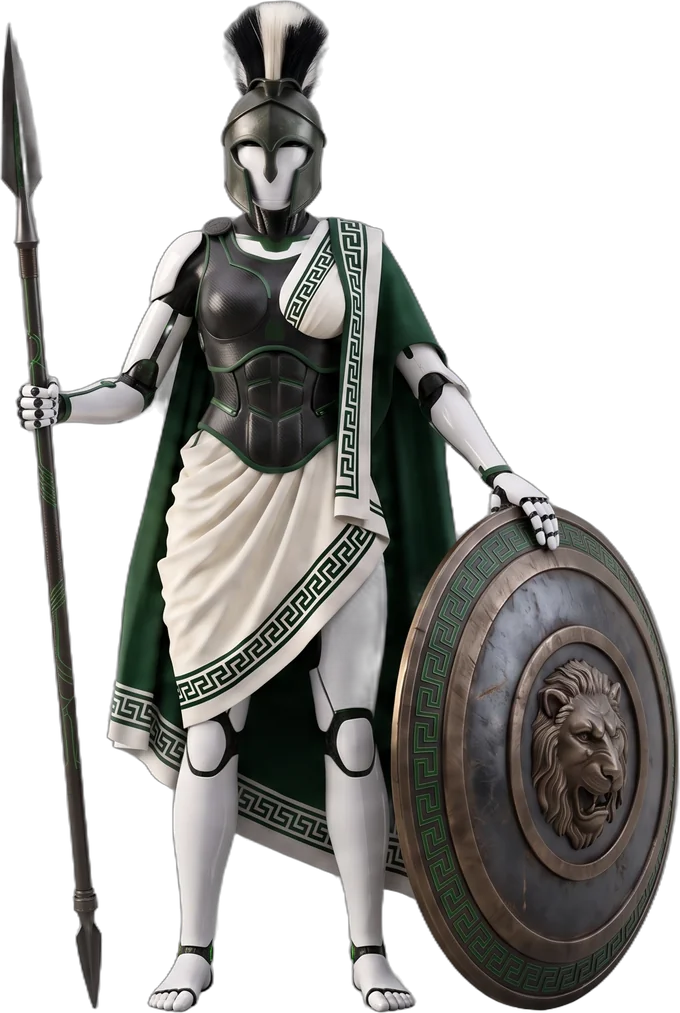
Let ATHENA, your protector of order and oversight, turn AI activity into structured evidence.
Aligned across frameworks, ready for every review.
- Any AI tool
- Prompts never stored
- Live in 5 minutes
Colchix governs the AI tools your teams already use, among them ChatGPT, Claude, Gemini, Microsoft Copilot, Cursor, Mistral, Perplexity, DeepSeek, GitHub Copilot, Grok, Notion AI, Hugging Face, Meta AI, Qwen, Ollama.


ATHENA FAQs
Your questions about ATHENA, answered.
What is ATHENA and how does it support AI compliance?
ATHENA is Colchix's AI Compliance Agent. It turns everyday AI activity into structured governance records and audit evidence, so organizations can track AI usage, document oversight and stay accountable. By connecting activity data, governance actions and compliance requirements across frameworks, ATHENA moves teams from manual documentation to continuous, evidence-based AI governance, wherever they operate.
Can ATHENA track AI activity across enterprise and personal accounts?
Yes. ATHENA brings together the activity logs available from supported enterprise AI platforms, such as ChatGPT and Claude, with activity captured from supported personal accounts and unmanaged AI tools through Colchix. You get one view of AI usage beyond centrally managed environments, without the blind spots native enterprise logs leave.
Which AI governance and compliance frameworks does ATHENA support?
ATHENA works across AI governance and compliance frameworks, wherever your organization operates: from the EU AI Act and the GDPR to ISO/IEC 42001, the NIST AI RMF and national, industry-specific or internal requirements. It organizes evidence, maps activity to the relevant controls and keeps several frameworks in one place, so your processes adapt as the rules evolve without starting from scratch.
How does ATHENA turn AI activity into audit evidence?
ATHENA structures the available AI activity into traceable records: the AI tool used, the account type, timestamps, user or department context and the relevant governance events. Where supported, each record links to your policies, controls and compliance requirements, so teams can show oversight without reconstructing activity from disconnected systems.
Can ATHENA replace spreadsheets and manual AI governance tracking?
ATHENA replaces most of the spreadsheets, screenshots and scattered documents by keeping AI activity records and governance evidence in one platform. Teams organize information, track actions and keep a consistent evidence trail over time. Human oversight, policy decisions and compliance reviews stay with your people; the paperwork behind them gets much easier.
Does ATHENA store AI prompts or confidential conversations?
No. ATHENA supports governance through activity metadata and structured evidence, not conversation histories. Records include timestamps, tools, account types, activity categories and governance events, depending on the integration and configuration. Collection and retention follow the capabilities you enable; the Security page has the details.
Security & deploymentCan ATHENA help us prepare for audits and regulatory reviews?
Yes. ATHENA keeps an organized, ongoing record of AI activity and governance actions, instead of collecting evidence only when an audit begins. Teams review the relevant records, find the gaps and export the evidence for internal assessments, external audits and regulatory reviews, with far less manual preparation.
How does ATHENA work with ARGUS and TALOS?
ATHENA is the compliance and evidence layer of the Colchix platform. ARGUS shows how AI is used, shadow AI included, and TALOS protects sensitive information during supported AI interactions. ATHENA brings their activity and protection records into one structured governance record, connecting what you discover and protect with the evidence you need to show oversight.
Explore ARGUSWhat is THEMIS?
THEMIS is Colchix's System One² AI model, the judgement under ARGUS, TALOS and ATHENA. For ATHENA, it files each record under the rule it proves, in milliseconds: a prompt sent from a personal account becomes evidence under the EU AI Act or the GDPR, with the gap flagged where there is one. It decides on your rules.
Explore THEMISAsk AI about ATHENA
Get an independent answer. The question's ready, pick your assistant.